


‘Heumann’ Offers Human Touch in Disability Depiction
With any feature about disabled characters — the one or two released every few years — disabled viewers wonder if this is the moment everything will finally change. Is representation actually going to be better, more equitable? Usually, the answer is no. But within the release of Apple’s Being Heumann, a look at disabled activist Judy Heumann and the 1977 San Francisco sit-in, there is a quiet rumble brewing that feels like change.
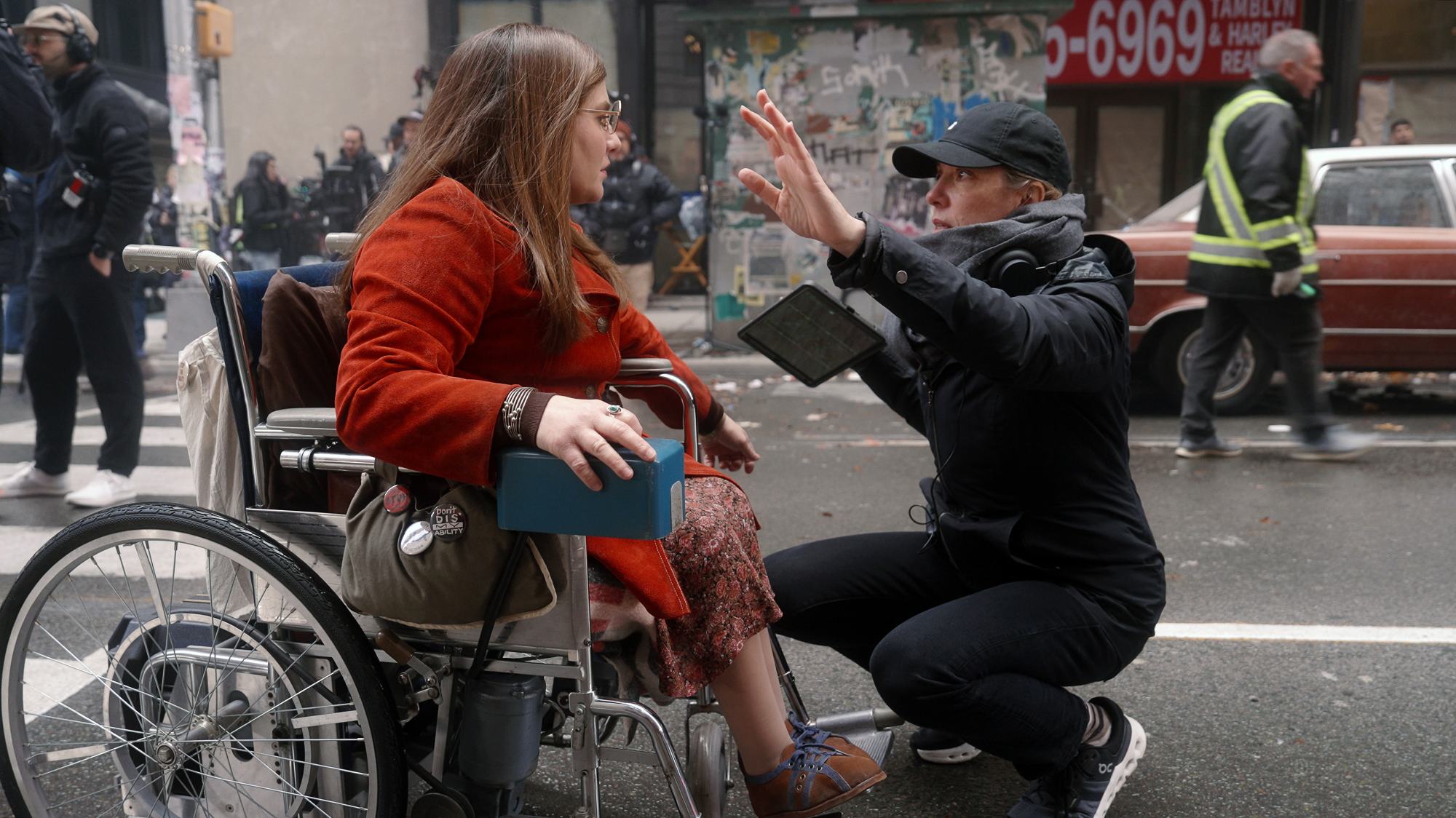
Director Sian Heder has felt that before, since she helmed and co-wrote the Oscar-winning feature CODA in 2021. And yet after the success of that feature, Heder knew she had to do more with Being Heumann. She couldn’t just direct a story about disability without expanding the opportunities for disability behind the camera. “I’m someone who really believes in research,” she tells Golden Globes. “I use people as research and yet, at the same time, unless someone is elevated to be a true collaborator there’s always going to be limitations put on how much their voice is allowed to participate in the process.”
So when it came time to adapt Heumann’s memoir for film, Heder understood her own limitations. She initially hired Rebekah Taussig as a consultant on the project. “The research part of it was really exciting,” said Taussig. “I was sending Sian pages of notes and was so excited about what I was finding.” Yet as the pair started working on things, Heder started to notice what a flair for storytelling Taussig had. Heder approached Taussig with an amazing opportunity: to co-write Being Heumann alongside her.
Taussig admits she’d dabbled in screenwriting prior to this, but was far from an expert. “I was soaking up as much from Sian as I could as we started cracking all of this,” said Taussig. Through numerous emails and Zoom calls the pair started assembling the movie, with an emphasis on not just telling the story of the 504 sit-ins, a key stepping stone in the disabled rights movement towards the formation of the Americans With Disabilities Act, but also showing how disabled people were living in the 1970s.
“One of my least favorite things about [earlier] representation is when the actual lived texture of disability is completely erased, and all we have is a wheelchair and a perfectly accessible environment somehow, and the only thing that needs to be triumphed over is the attitude of this character,” Taussig said.
Sequences showing Judy (Ruth Madeley) waiting for her caregiver to help her go to the bathroom, getting her socks on, or watching characters talk through transferring them, all were crafted with an eye towards showing how disabled people move through spaces everyday, and how often they’re placed in dependent situations with others.
It was also an opportunity for Heder to learn where she was limited. She admits one can do as much research as they want, but only those with lived experience can bring a true authenticity. “I’m a non-disabled person who, yes, I would hope that I’m an ally to this community, but I’m not inside of this experience,” said Heder. “So having someone who can really speak to that was so important for me.”
Case in point, the relationship dynamics between Judy and her love interest Jim (Jon Beavers). It was through her conversations with Taussig that the two were able to give nuance to a relationship that blends caregiving with attraction. “I hope my contribution was character arc,” Taussig said. “Trying to get into the worlds of these different experiences inside the building. The difference between someone like Brad Lomax [Antwan Tolliver] going through this experience versus someone like Judy.”
Actress Madeline Delp, who plays Judy’s protest partner Kitty Cone, was impressed with the multifaceted characters and ways the movie integrated the various disparate groups, like the Black Panthers, whose analogous goals for equality made them allies to the disabled protesters.
“Sometimes we feel frustrated with our lives when we don’t feel like they’re going in a straight line,” she said. “We want to get to this goal, but yet we have all these side quests, and it just reminded me that you never know what kind of experiences are going to serve such a greater purpose in your life. The 504 protest might not have been successful if they hadn’t brought in those other people to help.”
Taussig was also determined that they would show all the different sides to Judy, a woman who was simultaneously inspiring, upbeat, difficult, tenacious, and arrogant. “What was exciting about writing her the way that we did was partly defying disability tropes,” said Taussig. “If you read her book, she is fierce. She gets shit done.”
Taussig found satisfaction in taking her out of the standard-mold disabled women are often placed in: that of a grateful innocent. “If she had been a man, would we even be having that conversation at all? If she was in a male body, then it’s like, oh yeah, she’s a leader.”
The same can be said for the writing of Kitty Cone, who could, in the wrong hands, be a smiling pushover. “She was also a strong leader when she needed to be,” Delp explains. “We didn’t have time to show the fact that Kitty really did become a strong leader within the building, and was really hand-in-hand with Judy, organizing people and making sure that they were figuring out strategy.” Many of the arguments between Judy and Kitty, where the pair debate strategy, were true to life.
As the movie undergoes multiple screenings, the conversation is starting up again regarding the future of disabled representation. Heder understands that the work is far from over. “One story cannot heal decades of zero representation, and it can’t hold it all,” she said. “If you’re trying to hold it all, you end up in a really general space that can often lead to more misrepresentation, or generalized representation, that people don’t relate to or they don’t see themselves in that character.”
Being Heumann can’t represent the entirety of the disabled experience, and it certainly shouldn’t be the only disabled rights movie made over the next decade.
For the moment though, Being Heumann is occupying a unique point in film history. With over 20 disabled roles, filled by disabled actors, it’s letting a generation of people growing up not seeing themselves a chance to identify with a character. Delp is one such person. “I look back at the 10-year-old me who never saw anybody like me on screen,” she said. Now, the idea that a young disabled girl watching her on screen gives her chills. It shows the power of representation, and why Being Heumann is just the start.