


Disability Pride Month: A Chance to Celebrate A Handful of Smart Films
July is Disability Pride Month, a time to look at disability representation in the movies. Not surprisingly, the numbers aren’t great.
According to the most recent Annenberg Inclusion study “only 2.4% of speaking or named characters were shown with a disability” and that number has been stagnant since 2015; most either star, are directed, written and produced by able-bodied people. But some movies try their hardest to write the narrative and they’re ones worth celebrating.
The list below includes some favorites when asked, “What are the best movies to watch about disability?” Hopefully, these become a launchpad towards seeking out more movies about disability and questioning why Hollywood keeps hyping the same narratives.
Freaks (1932)
Tod Browning followed the ultra-successful Dracula with this unforgettable adaptation of Tod Robbins’s short story Spurs. To this day Freaks features one of the largest ensembles of disabled performers ever seen on screen (yes, in 1932). Harry Earles stars as Hans, a little person who falls in love with the manipulative trapeze artist Cleopatra (Olga Baclanova), unaware that she intends to marry him solely to steal his fortune.
MGM promoted the film as a lurid horror film, famously asking audiences, “Can a full-grown woman truly love a midget?” But Freaks is more interested in the lives and community of its disabled characters than in exploiting them. Browning presents them with empathy and humanity, depicting their friendships, routines, and close community ties. The true monster is not the disabled community but Cleopatra herself, whose cruelty embodies the ableism and exploitation they face. The movie is often cited as Browning’s downfall, which isn’t 100% true. It remains, however, ahead of its time and cements the director as one of the few actually interested in authentic casting.
The Best Years of Our Lives (1946)
William Wyler’s drama features an extraordinary performance from disabled veteran (and bilateral amputee) Harold Russell as returning World War II vet Homer Parrish. Russell made history by earning two Academy Awards for the role and bringing an authenticity to Homer’s experiences. Despite his Oscar-winning performance, Russell found few opportunities in Hollywood afterward, reflecting the industry’s entrenched ableism that still exists today. He made a memorable return, decades later, in Richard Donner’s Inside Moves (1980), but his acting career never reached the heights it should have.
The Sign of the Ram (1948)
One of classic Hollywood’s great hidden gems, this John Sturges drama deserves far more love, especially for its remarkable lead performance from wheelchair user Susan Peters. Like Russell, Peters struggled to find meaningful roles in an industry that had little interest in disabled performers after a hunting accident left her paralyzed. Blending family drama with touches of film noir, this adaptation of Margaret Ferguson’s novel allows Peters to deliver a nuanced performance as a woman trying to appear cheerful and resilient for the sake of her family while quietly grappling with the fear that an abled woman could take her place. It’s a layered exploration of disability, identity, and insecurity that feels strikingly modern.
Coming Home (1978)
Released just three years after the end of the Vietnam War, Coming Home remains one of the defining films about disability to emerge from the era. Hal Ashby’s drama broke new ground in its depiction of disabled autonomy, intimacy, and sexuality by treating the wheelchair-using Luke Martin (Jon Voight) as a fully realized person as opposed to an object of pity or inspiration.
Voight’s performance was deeply researched and he captures not only the emotional complexities of his character but also the physical realities of living as a wheelchair user. From the way Luke navigates his chair to the confidence with which he moves through the world it reflects the extensive preparation undertaken by both Voight and Ashby. The film also serves as a vivid portrait of life before the Americans with Disabilities Act (ADA) and illustrates the everyday barriers disabled people faced in an inaccessible society.
Children of a Lesser God (1986)
At only 22 years old, Deaf actress Marlee Matlin won a Golden Globe for her performance and went on to be the youngest Best Actress Oscar winner for her screen debut in this romantic drama. Her performance as Sarah is remarkable for how flawed and conflicted the character is. She’s brilliant, stubborn, and emotionally complicated, standing in sharp contrast to the saintly disabled women Hollywood had long shown off. Sarah embraces her deafness as an integral part of who she is. She dreams of having children, specifically Deaf children, a perspective that directly challenges decades of narratives that portray disabled women as either asexual or ashamed of their disabilities. The real conflict in the movie lies in a society determined to convince her that it should be. Matlin’s fearless performance remains one of the most important portrayals of disability in American cinema.
My Left Foot (1989)
My Left Foot is another film that rejects the familiar “overcoming adversity” formula in favor of authenticity. Daniel Day-Lewis stars as Irish painter and writer Christy Brown, whose cerebral palsy shaped his experiences. The film isn’t interested in showing Christy as inspirational because of his disability but shows off how he’s a complete, complicated person who can be kind of an ass at times.
The viewer watches Christy experience many of the ordinary milestones of growing up, spending time with friends and awkward teenage moments, without belaboring them as “disabled” milestones. His close-knit family provides unwavering support and his conflicts with his father stem more from clashing personalities rather than disability itself. Christy is also allowed to be imperfect. He can be stubborn, selfish, and frustrating, and the film never forces him into a tidy moral box. My Left Foot embraces the messy humanity of its subject and is fantastic for it.
Sound of Metal (2019)
Few films explore assistive technology with the nuance of Darius Marder’s Sound of Metal. The movie’s skill lies in presenting hearing aids and cochlear implants not as miraculous cures but as valuable tools that help Deaf and disabled people navigate the world. Riz Ahmed’s performance as Ruben, a drummer affected by sudden hearing loss, is fascinating. He believes that a cochlear implant will restore everything he has lost. He eventually discovers that his greatest challenge isn’t his deafness, but his own fear of how he looks at himself as a Deaf man. Ruben accepting his deafness rather than trying to escape it is a necessary one in today’s film and comes through so wonderfully here.
Crip Camp: A Disability Revolution (2020)
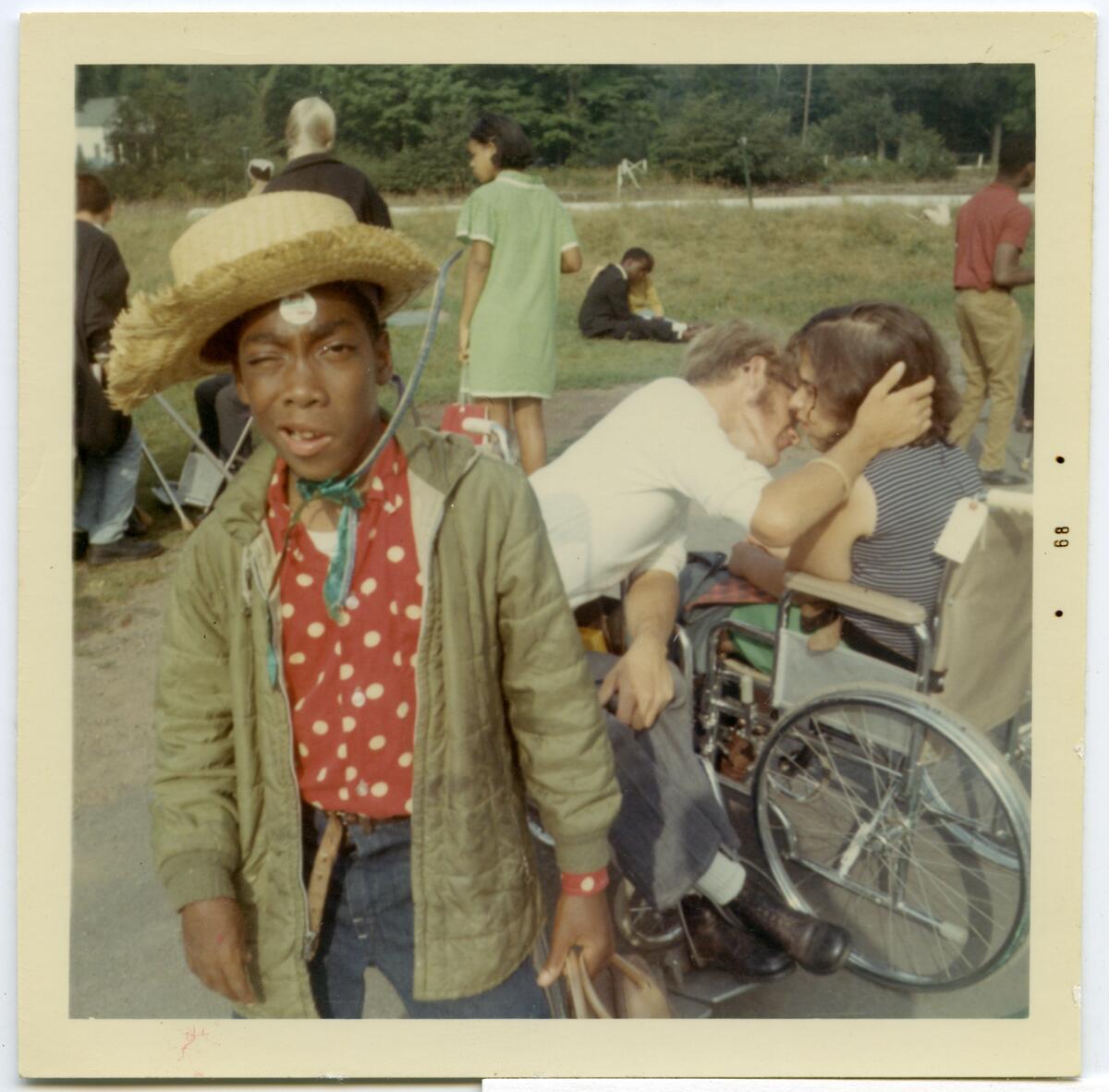
Jim LeBrecht and Nicole Newnham’s documentary is both an inspiring history lesson and a joyful celebration of disabled community. The doc follows the campers at Camp Jened, a summer camp in the Catskills where disabled teenagers found friendship, independence, and a sense of belonging denied to them elsewhere. Crip Camp captures something rarely seen on screen: disabled young people simply being teenagers who flirt, have sex and smoke marijuana. The film uses this as the launchpad to trace how several of those campers became leading figures in the disability rights movement, helping secure the protections and freedoms that disabled people have today. Crip Camp remains an essential documentary that honors both the movement and the people who made it possible.
A Different Man (2024)
Aaron Schimberg’s film brilliantly dismantles many of the assumptions that have defined disability narratives on screen, inviting audiences to question the stereotypes they’ve been taught to expect and showing how easily sympathy shifts when those conventions are turned inside out.
Sebastian Stan (Golden Globe winner as best actor, musical/comedy) stars as Edward, a man whose facial difference leaves him convinced that a medical cure will solve all of his problems. He’s transformed into someone conventionally attractive, but rather than delivering the expected story of liberation the film follows Edward as he becomes consumed by his fixation on Oswald (Adam Pearson). Oswald is another man with a facial difference who is confident, charismatic, and completely comfortable in his own skin.