


Golden Globes Ramp Up Arab American Appreciation
National Arab American Heritage Month is recognized in the U.S. during April to celebrate the history, culture, and contributions of the diverse Arab American population. Over the years, the Golden Globes have recognized both Arab talent and stories spotlighting the eclectic diaspora that lives Stateside.
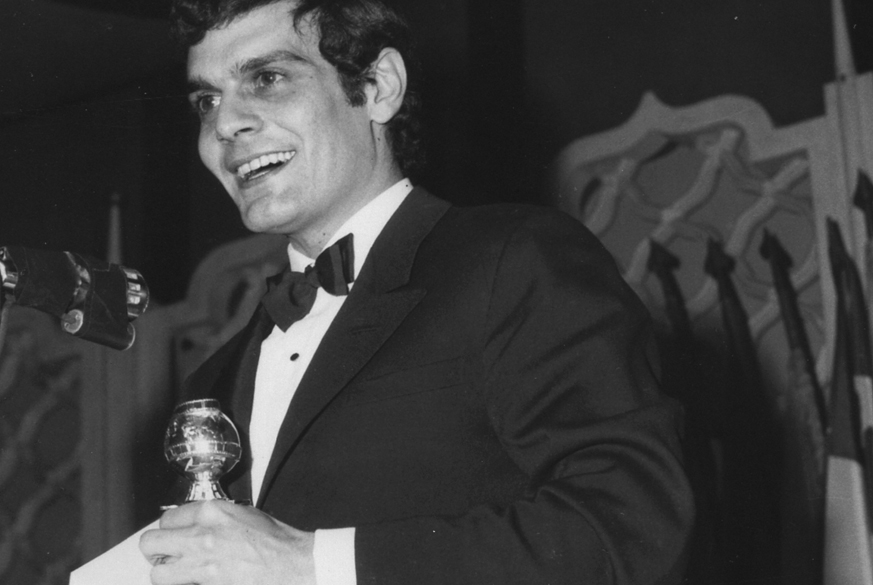
One of the most prominent Arab artists to secure a Golden Globe is Omar Sharif. Born in Alexandria, Egypt in 1932, née Michel Yusef Dimitri Chalhoub, Sharif was one of Egypt’s greatest film stars. After achieving on-screen fame overseas, the actor landed his first English-language role as the fictitious Sherif Ali in David Lean’s Lawrence of Arabia (1962). For his performance, Sharif won a Golden Globe Award for Best Supporting Actor, Motion Picture, as well as a shared Golden Globe Award for New Star of the Year, Actor, which he earned alongside Lawrence of Arabia costar Peter O’Toole. Sharif later won a Golden Globe Award for Best Actor for his famed role in Doctor Zhivago.
The Golden Globes inaugurated the Omar Sharif Award in 2024 to honor the late actor, who died on July 10, 2025, as well as to celebrate Arab talent. The award has since honored prolific Arab talent such as actress Cairo-born Yousra, Tunisian actress Hend Sabry, and Egyptian actor Hussein Fahmy.
Notable Arab American winners at the Golden Globes include Rami Malek, who won Best Actor in a Motion Picture, Drama for his portrayal of Freddie Mercury in Bohemian Rhapsody (2018) and, the following year, Ramy Youssef, who landed the Best Actor in a Television Series, Musical or Comedy, for his Hulu television series Ramy.
Youssef’s show follows the experiences of Ramy, a young Egyptian-American Muslim as he blends his American life with that of his family, faith and heritage. “We made a very specific show about an Arab Muslim family living in New Jersey and this means a lot to be recognized on this level,” Youssef said during his acceptance speech.
Even with recent awards recognition for Arab talent, Hollywood has remained fairly limited in Arab representation, both on and off-screen. A 2022 study by the USC Annenberg Inclusion Initiative found that less than 2 percent of 3,802 characters reviewed were coded as Middle Eastern and North African. Nielsen data shows that MENA representation on screen is pretty dismal, sitting at just 2.5% across 1,500 broadcast, cable and streaming TV shows. (It is important to note that not everyone from the MENA region is Arab — with it being both ethnically and culturally diverse, featuring large populations of Persians, Turks, Kurds, Amazigh, Armenians, Azeris, and others.)
Serena Rasoul, who is the founder of MA Casting, a creative consultancy that specializes in providing talent from Middle Eastern and Muslim backgrounds, notes that achievements such as The Voice of Hind Rajab (2025) receiving a Best Motion Picture – Non-English nomination at the 83rd Golden Globes can feel like both “a huge moment” and “a drop in the bucket.”
Rasoul says true “systemic change” can come in the form of Arab-focused initiatives, such as the creation of Watermelon Pictures. The independent distribution company has set a course to showcase Arab talent that has been misrepresented by mainstream media, producing films such as Life is Beautiful (2023), From Ground Zero (2024), To a Land Unknown (2024) and The Encampments (2025).
“They opened up a whole new space in the Hollywood entertainment world where they’re producing these films that normally wouldn’t get picked up,” Rasoul said.
Rasoul also points to the Globes’ creation of the Omar Sharif Award as progress, “because institutionalizing the contributions that Omar Sharif made to Hollywood, that’s a step in the right direction. That is a form of systemic institutionalized change.z
“I’m glad that that award was put into place because it moves from Arabs having a moment to Arabs having a partnership,” Rasoul continues. “We’re integrated into the fabric as opposed to standing outside of it.”