


How the History of LGBTQ Hollywood Can Be Found at the Golden Globes
As Pride Month 2026 comes to a close, it’s worth looking at the history of LGBT Hollywood, as seen through the history of the Golden Globes.
The first performance of an LGBTQ character nominated for a Golden Globe arrived when the word “homosexual,” or any term like it, was forbidden from being uttered in a feature film — and the awards themselves were still in their infancy.
At the fourth Golden Globe Awards, held Feb. 26, 1947 in the Hollywood Roosevelt Hotel, Clifton Webb’s performance in the M. Somerset Maugham adaptation “The Razor’s Edge” earned Webb the prize for supporting actor (technically, “Best Performance by an Actor in a Supporting Role in any Motion Picture”). At the time, the Hays Code’s prohibition on “any inference” of so-called “sex perversion” prevented the filmmakers from referring to Webb’s character, the well-heeled Elliott Templeton, as a gay man. But any savvy observer could see that’s exactly who Templeton — a fashionable, effete snob and confirmed bachelor — was meant to be.
Since that year, Golden Globes voters have issued at least 219 nominations for performances of lesbian, gay, bisexual, transgender and queer characters. Thanks to the uniquely inclusive structure of the awards — separating genres and celebrating excellence in film and television in the same ceremony — the Golden Globes provide a fascinating and comprehensive portrait of how LGBTQ representation has evolved over the past 82 years.
In the first two decades covered by the Golden Globes, the tiny handful of LGBTQ characters that did slip past the censors could only be presented through suggestion and indication, sometimes with a somewhat heavy hand (as with George Sanders’ nominated performance as acid-tongued theater critic Addison DeWitt in 1950’s “All About Eve”) or with not much more than a longing gaze at a yearned for object of desire (as with Stephen Boyd’s winning performance as Roman tribune Messala in 1959’s “Ben-Hur”). Whether or not most moviegoers — or Golden Globes voters — caught wise to this kind of gay coding at the time matters less than the fact that the representation was there for those who did notice.
By the 1960s, LGBTQ characters were allowed to exist more out in the open, though in less than favorable circumstances. In the 1961 drama “The Children’s Hour,” Shirley MacLaine (nominee for best actress in a drama) plays Martha, a closeted lesbian whose life is ruined when a student at the boarding school Martha runs with her friend Karen (Audrey Hepburn) spreads a rumor that Martha and Karen are lovers. The word “lesbian” is never uttered, but persecution of lesbian identity is the driving engine for the story. Martha’s tragic fate at the end of the film could be read as a depressing example of the pervasive homophobia in society at the time — as well as an indictment of how that homophobia drove Martha to suicide.
The first performance of an openly LGBTQ character to win a Globe was given by Robert Redford — yep, that Robert Redford. In the now defunct category of New Star of the Year, Redford won for playing bisexual actor Wade Lewis in the 1965 drama “Inside Daisy Clover.” Again, the film never depicts Wade with another man; instead, the revelation that he’s bisexual comes after he’s disappeared during his honeymoon with the (female) title character (as if the fact that Wade is bi proves he’s feckless and unreliable).
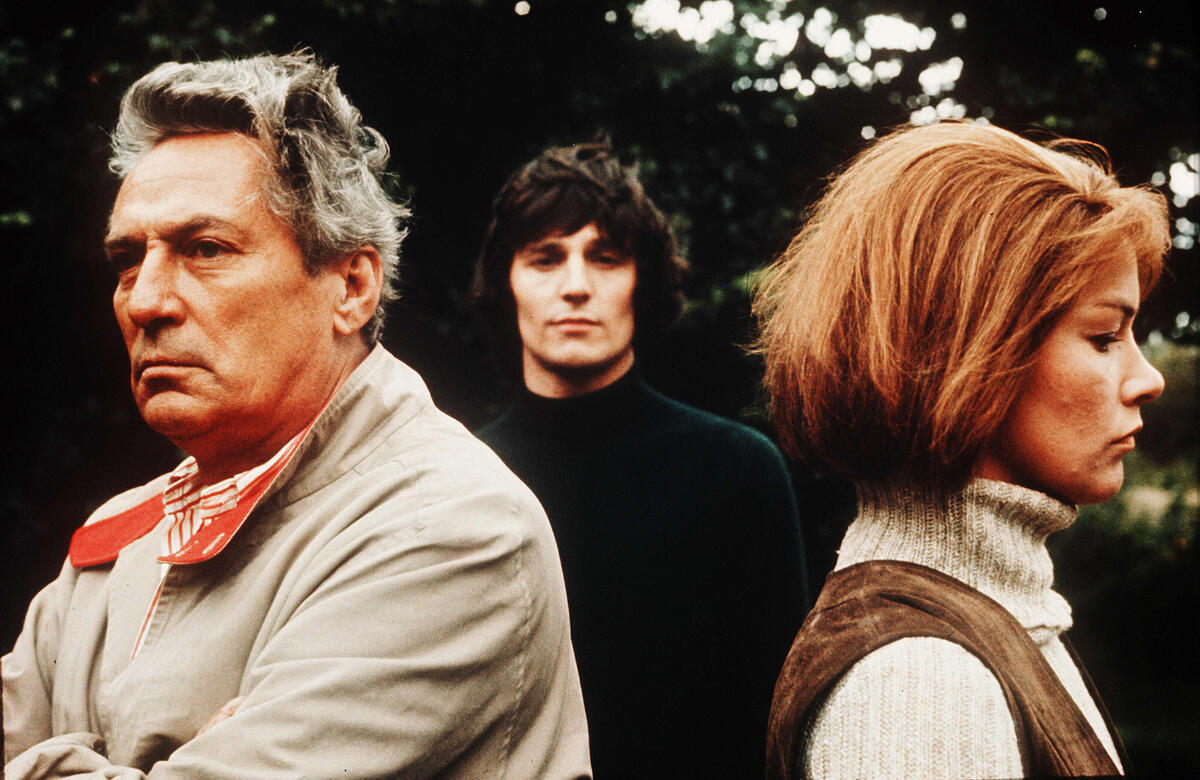
In 1971’s “Sunday Bloody Sunday,” there’s no such equivocation about its queer characters: Peter Finch, nominated for lead actor in a drama, plays a gay London doctor who has a passionate affair with a bisexual man (who’s also sleeping with a divorcée played by Glenda Jackson). The movie, a true landmark in LGBTQ representation, also won the Golden Globe in the discontinued category of Foreign Film in the English Language.
The following year, Joel Grey won supporting actor for playing the bisexual master of ceremonies in the sexually liberated 1972 musical “Cabaret,” which was nominated for 9 Golden Globes, and won three, including for best comedy or musical. Chris Sarandon became the first Golden Globe nominee (for New Star of the Year) for portraying a trans woman, in 1975’s “Dog Day Afternoon”; the character’s boyfriend (played by lead actor nominee Al Pacino) robs a bank to pay for her gender affirmation surgery.
All of those nominations can be seen as signs of real progress, but perhaps the most telling turning point came during the 39th Golden Globes, held in 1982. Three performances of three wildly different gay men were nominated that year: James Coco, for supporting actor, as an unemployed actor in the dramedy “Only When I Laugh”; George Hamilton, for actor in a musical or comedy, for the dual role of Don Diego de la Vega and his flamboyantly gay twin brother Ramón in “Zorro, the Gay Blade”; and Tony Randall, for the first TV LGBTQ performance nominated for a Golden Globe, as a gay New Yorker who befriends a single mother in the NBC sitcom “Love, Sidney.”
Throughout that decade, feature film performances of LGBTQ characters began winning Golden Globes more frequently, including Cher for supporting actress in 1983’s “Silkwood” and Whoopi Goldberg for actress in a drama for 1985’s “The Color Purple.” But it wasn’t until the 1990s before LGBTQ characters began appearing on television with enough regularity — and enough quality — to warrant frequent Golden Globe recognition.
In 1994, Glenn Close and Judy Davis were nominated for their work in the NBC TV movie “Serving in Silence: The Margarethe Cammermeyer Story,” about a military nurse discharged from National Guard after she disclosed she was in a relationship with another woman. Ellen DeGeneres was nominated for her groundbreaking 1997 coming out season of her ABC sitcom “Ellen.” Angelina Jolie won her second Golden Globe for her performance for the 1998 HBO TV movie “Gia” as the titular lesbian supermodel.
Then came NBC’s “Will & Grace,” which, starting with the 2000 ceremony, earned stars Eric McCormack and Sean Hayes six Golden Globe nominations each for their respective lead and supporting performances as openly gay men Will Truman and Jack McFarland over the run of the show (inclusive of the 2010s revival).
LGBTQ representation exploded in the 2000s, especially on television. At the 2004 ceremony alone, all five nominations for supporting actor in a series, miniseries or TV movie were for LGBTQ characters: Hayes for “Will & Grace,” Lee Pace for playing trans woman Calpernia Addams in the Showtime film “Soldier’s Girl,” and Patrick Wilson, Ben Shenkman, and Jeffrey Wright (who won) for the HBO miniseries “Angels in America.”
From 2000 to 2026, Golden Globes voters issued roughly 160 nominations for performances of lesbian, gay, bisexual, trans, and queer characters in film and TV, most recently peaking in 2018, when a whopping 15 actors were nominated for LGBTQ roles, six of whom won that year: Rami Malek for “Bohemian Rhapsody,” Olivia Colman for “The Favourite,” Mahershala Ali for “Green Book,” Sandra Oh for “Killing Eve,” Darren Criss for “The Assassination of Gianni Versace: American Crime Story,” and Ben Whishaw for “A Very English Scandal.”
Since then, at least five Golden Globe nominations each year have been for LGBTQ roles, some years more than twice that number. Many of those nominees have been openly LGBTQ themselves, including Ben Platt, Billy Porter, Sarah Paulson, Cynthia Nixon, Dan Levy, Jim Parsons, Hannah Einbinder, Jeremy Pope, Jodie Foster, Bella Ramsey, Andrew Scott, Colman Domingo, Matt Bomer, Karla Sofía Gascón, Tessa Thompson, and Michaela Jaé Rodriguez — the first openly trans actor ever to win a Golden Globe.
It’s a far cry from the repressive days of the Hays Code, when a gay or lesbian character even making it into a film was a miracle, let alone in a performance noteworthy enough for awards consideration.