


Marilyn Monroe at 100: A Brief Career & Few Awards (Aside from Golden Globes), but a Long-Lasting Legacy
June 1 would have been Marilyn Monroe’s 100th birthday. She died in 1962, at age 36, but her brief stardom — 11 films in nine years — has kept her alive for decades, long after other stars have faded.
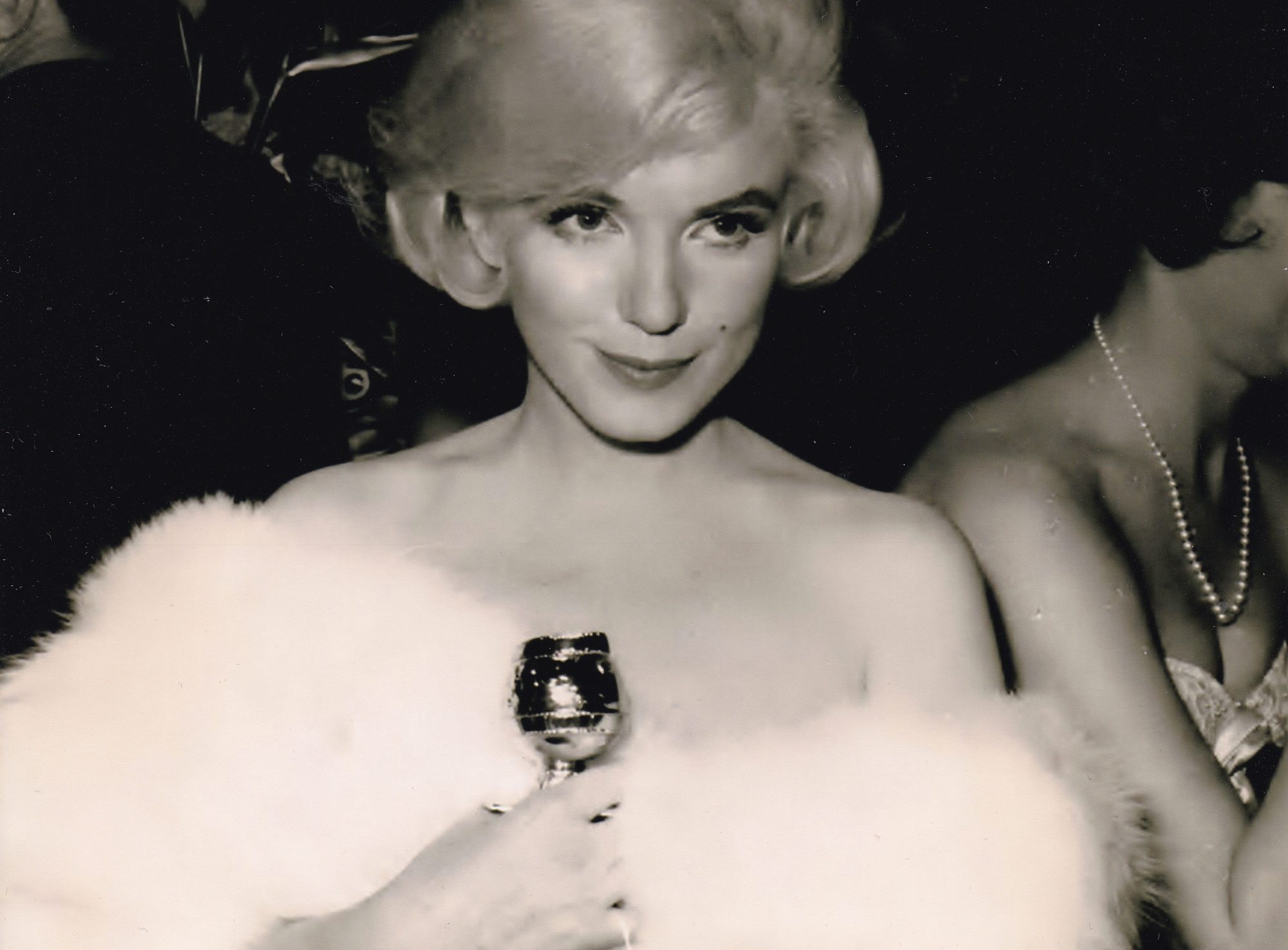
To theater owners and the public, Monroe was easily the biggest movie star in the world, but industry recognition was subdued. Never nominated for an Academy Award, she was nominated for two BAFTAs for her performances. Monroe’s biggest awards wins, stateside, are the two competitive Golden Globe noms she received for her work in 1957’s Bus Stop and 1959’s Some Like It Hot, winning for the latter. (She also won two Globes as World Film Favorite, a long-discontinued category.)
What was it about these two features that compelled the Globes to give her the recognition she hadn’t been able to find previously?
Bus Stop, based on William Inge’s play, was a production close to Monroe’s heart. The project tells the story of naive young cowboy Bo (Don Murray), who falls head over heels for aspiring singer Cherie (Monroe). His boorish manners immediately turn Cherie off, but Bo doesn’t care and is convinced she’ll marry him — whether she likes it or not.
For Monroe, playing Cherie was a chance to show off her talents, and get away from her previous ditzy blonde parts, most recently in The Seven Year Itch (1955) and There’s No Business Like Show Business (1954). Her company Marilyn Monroe Productions put together the film, with Monroe herself hiring director Joshua Logan. “She did a complete transformation,” including an Ozark accent, for Bus Stop, Andrew Wilson, author of I Wanna Be Loved By You: Marilyn Monroe—A Life in 100 Takes, tells Golden Globes.
The role is a decidedly unglamorous one for Monroe, and that was the point. Not only is she using an Ozark accent, but her makeup is meant to look cheap, her dance moves and singing intentionally bad. Cherie is a woman struggling to define her “direction” in life with the hopes of moving out of the small saloon she’s singing in and going to California. The arrival of Bo, and his demands that she’ll marry him, force Cherie to fight against her own destiny and that of a domineering man.
It’s hard to divorce Monroe’s personal life from her films. In Bus Stop, her character is tragic yet ultimately finds her power at the end. She’s controlled by men yet ends up learning how to master her control of them. As director Logan said after the movie, according to author Lois Banner, Monroe’s ability to blend tragedy with comedy was a great strength that served her well in the movie.
Though there’s less tragedy in it, her performance as Sugar in 1959’s Some Like It Hot, also blends a melancholy with comedy. “People had seen the kind of way that Marilyn had changed from the 1953 days of Gentlemen Prefer Blondes and lighter comedies,” says Wilson. “And even though Some Like It Hot is a comedy, there’s a greater depth and sensitivity and vulnerability to that role which I think was duly recognized.” Sugar describes herself as someone who always gets “the fuzzy end of the lollipop,” used and discarded by men who she routinely falls for even though she knows she shouldn’t.
In a book of interviews with filmmaker Cameron Crowe, director Billy Wilder said he and co-writer I.A.L. Diamond were surprised when Monroe approached them about playing Sugar. They hadn’t given much thought to the character, since they were so preoccupied with finding the right actors to play the 1920s musicians — roles played by Tony Curtis and Jack Lemmon — who have to balance the danger of their life-threatened situation with the comedy of dressing in drag.
With Seven Year Itch, Monroe was consistently late, and Wilder recalled “I said I’ll never work with her again.” But he and cowriter Diamond were delighted she wanted to do Some Like It Hot because she was such a star.
There are certainly commonalities between her characters in Some Like It Hot and Bus Stop. Both are women who have been underestimated because of their looks – Sugar’s walk is described as “Jell-O on springs” and a photographer takes a picture of Cherie’s backside when she isn’t looking – and are trying hard to carve their own paths. But as hard as they try to find autonomy, they instead fall back on their past decisions, with blind faith that this time things will turn out right.
Sugar chooses to get on the boat with saxophone player Joe (Tony Curtis), even though he tries to warn her he’s one of the no-goodniks she’s complained about. But Sugar, having known Joe as a woman called Josephine, decides to stay with him. Cherie, after finally getting Bo off her back, realizes she can tame him and decides to marry him after all.
Both performances turn Monroe’s dumb blonde persona around. Sugar admits she’s “not very bright” yet is constantly looking at the next angle to get Shell Oil heir Junior (Curtis’s Joe, in another disguise). She struggles with alcohol but never lets that diminish her singing with the band. She’s not dumb, she’s crafty, and she’s swayed by love and romance.
The same can be said with Cherie. Cherie is limited by her education, having grown up in the Ozarks, as well as by her finances. She’s a woman not looking for a hand-out, but a way to have security in life on her terms. The fact that both of them end up in better places than they started is a win that Monroe, unfortunately, didn’t get herself.
After her 1962 death, Laurence Olivier, her co-star and director in Prince and the Showgirl, said “She was a complete victim of ballyhoo and sensation.”
Wilder said “She was a … I don’t know, she was just a continuous puzzle, without any solution.”
Natasha Lytess, Monroe’s early acting teacher, said “People just view her as this warm thing,” says Wilson, “and view her through this kind of prism. When they see her, they see her as just a typical Hollywood blonde and it’s not their fault. Marilyn’s soul just doesn’t fit her body so they weren’t seeing the complexity of [her] acting skills or her ability to act.”
The Globes certainly did, recognizing her work twice, and no doubt for Marilyn Monroe, it was a high honor.