


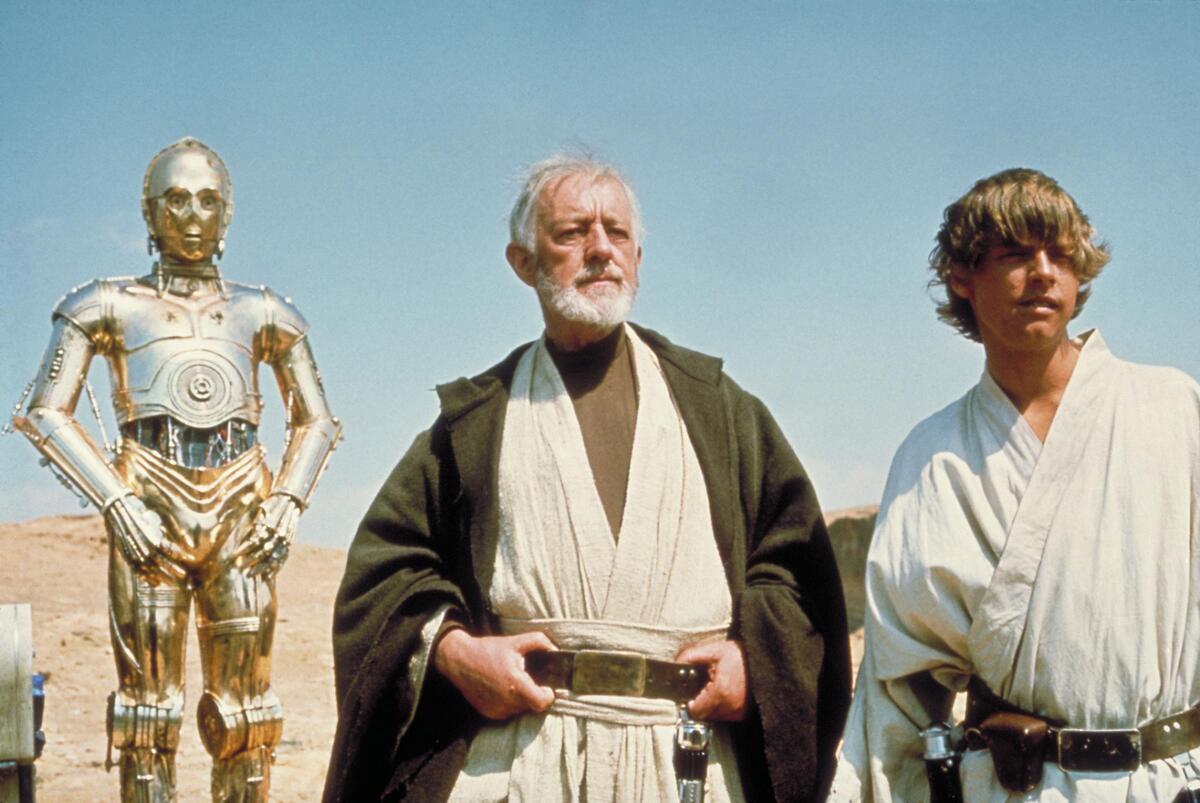
Star Wars Day Celebrates the New Hope of the Enduring Franchise
When George Lucas’ Star Wars was released in 1977, few anticipated that the film would not only transform the box office, but would go on to become one of the pillars of global pop culture for decades to come.
On the surface, Star Wars was an adventurous science-fiction tale: a simple story of good versus evil, a young hero, an oppressive empire, and a hope emerging from darkness. Yet what distinguished it from its contemporaries was not merely its technological innovations in special effects or its entertaining rhythm, but rather its capacity to function as an emotional and cultural response to its historical moment—and it is precisely this quality that has sustained it as a lasting phenomenon.
The film fit within the historical context of the late 1970s. The United States, along with much of the Western world, was grappling with political, economic, and existential crises: the Vietnam War, the Watergate scandal, the energy crisis, and a deep erosion of public trust in institutional authority. Cinema during this period often reflected this atmosphere of disillusionment — marked by darker tones, narrative ambiguity, and a pervasive skepticism toward the future. Star Wars introduced something markedly different: a narrative that was direct, ethically structured, and, crucially, hopeful. This return to the classical light-versus-darkness approach was responding to a cultural need to reconstruct meaning and hope.
This element of hope would later be formalized in the subtitle of the first installment, Star Wars: Episode IV – A New Hope, becoming one of the defining concepts of the franchise. Yet hope here is not an abstract notion; it is embedded within the structure of a modern myth. Luke Skywalker, a hero who begins at the margins of the galaxy, embodies an individual searching for meaning and identity within an unstable world. This narrative pattern, rooted in ancient mythic structures, enables audiences across cultures to recognize themselves within it. In this sense, Star Wars is not merely a film, but a reconfiguration of mythic structure within a modern cinematic framework.
At the time of its release, not all critics attributed such depth to the film. Some dismissed it as superficial entertainment—an artifact that “had nothing to say.” This response was partly shaped by a position separating art cinema against commercial cinema, often denying value to blockbuster productions. Over time, however, such judgments have proven premature. Precisely because of its apparent simplicity, Star Wars was able to accommodate multiple layers of meaning —layers that have been continually reinterpreted over decades by critics, audiences, and even by its own subsequent installments.
The Force, for instance, sustains a range of readings: It can be understood as a spiritual or quasi-religious energy, as a metaphor for inner balance, or even as an abstract structure of power. Its characters function in a similarly flexible way. Figures such as Darth Vader, Luke Skywalker, or Leia Organa are not fixed in meaning; they are continuously reinterpreted within shifting cultural and theoretical frameworks. This adaptability has allowed Star Wars to remain relevant, constantly rearticulated in relation to the concerns of each new era.
At the same time, the role of fan culture in sustaining this phenomenon cannot be overlooked. Star Wars stands as one of the earliest large-scale examples of a narrative universe in which audiences are not merely consumers but active participants in its reproduction and expansion. Through fan fiction, comics, novels, and countless reinterpretations, this universe exists as a constantly evolving network of narratives shaped by both official and unofficial cultural production.
Equally significant is the franchise’s relationship with the film industry itself. The immense success of the original film helped establish a new economic model that would later become dominant in Hollywood: the multi-installment blockbuster with expansive narrative worlds and extensive commercial potential. Yet unlike many of its successors, Star Wars managed to maintain a balance between industrial logic and creative integrity. Even as it evolved into a vast commercial empire, it preserved its narrative and emotional core — the fundamental story of hope, friendship, and resistance.
In the decades that followed, with the expansion of sequels, prequels, and new productions, this universe underwent substantial transformation. Some of these shifts — such as a greater emphasis on character psychology or the redefinition of gender and racial representation—reflect its ongoing adaptation to broader cultural changes. Each phase of Star Wars mirrors the concerns of its historical moment, from the relative optimism of the late 1970s to the identity complexities of the 21st century.
Perhaps the most crucial reason for the endurance of Star Wars lies in its preservation of a fundamental affect: a sense of wonder. This sense—an amalgam of imagination, adventure, and the exploration of the unknown — continually draws audiences back to its world. In an increasingly complex and often pessimistic reality, Star Wars sustains a space for imagining alternative possibilities — for believing that even in the darkest moments, some form of balance and hope persists.
Star Wars Day, observed on May 4 (“May the Fourth be with you”) is more than a linguistic pun. It marks the continuity of a collective cultural experience — one that has persisted for nearly 50 years and continues to redefine itself. Star Wars is not merely a series of films; it is part of the cultural memory of the contemporary world — a memory in which each generation discovers its own meaning.