


‘Forgotten Island’ Welcomes Newcomers to Filipino Culture Like It’s a Party
This is a big month for Filipinos in Hollywood history.
Two-time Disney princess Lea Salonga became the first Filipina to receive a star on the Hollywood Walk of Fame. “Coyote vs Acme,” in which Filipino-Canadian actor Eric Bauza voices a majority of the Looney Tunes characters, crossed $65 million worldwide surpassing what Ketchup Entertainment paid to acquire it and the tax writeoff Warner Bros. would have shelved it for. And on September 25, DreamWorks-Universal’s “Forgotten Island” releases in theaters.
All of this is a good buildup for Filipino American History Month in October.
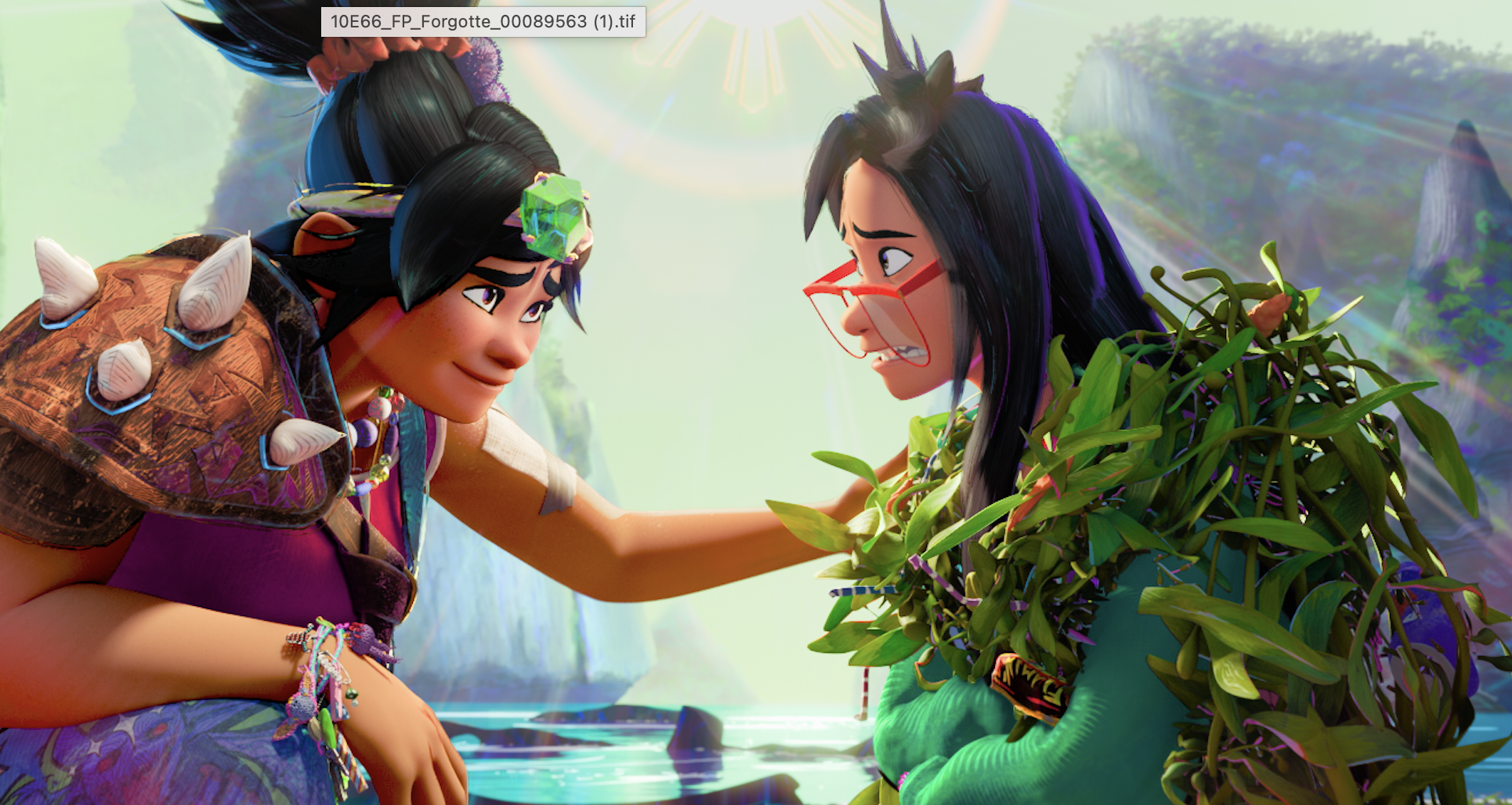
Helmed by DreamWorks veterans Januel Mercado and Joel Crawford, “Forgotten Island” is the first feature-length animated film by a major production company inspired by Filipino culture and mythology. Set in the Philippines during the 1990s, the film follows best friends Jo (played by singer H.E.R.) and Raissa (Liza Soberano) who discover the magical, monster-inhabited island of Nakali and set off on one last adventure before Raissa moves to America to attend college.
In addition to the leads, the cast also includes Filipino talent like Lea Salonga, Jo Koy and Manny Jacinto.
Mercado said he and Crawford cast H.E.R. partly due to an interview she did with Vogue Philippines.
“She’s this cool musician and really chill, but early on I found this interview … where she’s trying all kinds of Filipino food and geeking out eating balut, so excited and just a goofball,” Mercado laughed. “Joel and I were watching it and I was like, ‘That’s Jo.’”
Liza Soberano also auditioned to play Jo, but both she and the production team quickly realized that her personality fit much better with the film’s other lead, Raissa. During a press conference, Soberano shared that she related to the character because they were at parallel points in their lives, leaving the Philippines and looking to develop their careers in America.
Even among the non-Filipino cast members, cultural respect was paramount. For example, Mercado and Crawford said Dave Franco, who plays the weredog Raww, approached the role with energy and was excited to learn the “cultural touchstones.”
“There’s this amazing combo from Dave of his performance feeling so effortless, but you see him putting all his effort and passion into it, even when it came to Tagalog words,” Mercado said “He didn’t skip a beat. If the line had Tagalog, he’d just ask how to pronounce it and he’d nail it pretty fast.”
Maintaining the authenticity of a Filipino story was a core tenet while making the film and influenced their decision to include native accents and Tagalog words without English translations. This was easy for Mercado, who is Filipino and grew up with the culture, but not as much for Crawford, who is not Filipino but his wife is.
“Me not being Filipino but being someone who has been my whole life invited in by Filipinos, that weighed heavily on the way we told the story and was almost an advantage with that point of view for an audience that is not familiar with the culture, with Tagalog, with the mythology,” Crawford explained. “For me it always felt like the way I was treated when I was at a Filipino family party. Nobody is explaining what every food is and talking about karaoke, you’re just there and you’re treated like family. Because you’re so welcomed in the same way the audience is dropped in but respected, they’re leaning in to get context clues and understand everything that’s happening.”
The writer-director duo said it wasn’t easy convincing Universal and DreamWorks to greenlight the film, but had the trust of the studios due to their previous work like “Puss In Boots: The Last Wish.” After sharing the script and hosting early screenings, one executive lauded how relatable the story is and that the movie’s “superpower is in its specificity.”
They leaned into that relatable specificity. One example, according to Crawford, was Raww the weredog, who is relatable to a lot of cultures via the werewolf archetype, but also specific to the Philippines because the country has no wolves, hence the character being a dog.
“Forgotten Island” proudly displays cultural references and “Filipinisms” like jeepneys, lechon, lip pointing, over-the-top karaoke and even a barrel man. Most of the details Mercado and Crawford wanted to include and that served the story made it into the final cut, but one cultural quirk was forgotten.
“One detail is taking a drink to go in the Philippines and how it’s poured into a Ziploc bag with a straw. We had concept art of the girls drinking from a Ziploc bag,” Mercado shared. “I think we were just deep in production and putting out fires when we realized we never designed the bag!”
A single animated film amid the history of Hollywood might not seem like much, but the duo believes that “a little goes a long way” in terms of representation, and they have enjoyed seeing audiences react to the trailer full of cultural icons like the Filipino sun.
The character Raissa was inspired by Crawford’s wife Kathy and named after her cousin (Jo is based on and named for Mercado’s sister), and he recalled a reaction video he saw from someone also named Raissa.
“She was saying growing up in the U.S., people would never get her name right,” Crawford recalled. “She knows this character wasn’t named after her, however being able to proudly hear her name and say her name and for people to be familiar with it was such a meaningful moment for her.”